Building a Coaching System, From Structure to Launch
Self-initiated build, informed by two real client engagements (redacted).
Challenge: Coaches and program leads with real expertise often lack the structure to turn it into something scalable. This pattern showed up firsthand while designing the learner and facilitator journey for a real community-based entrepreneurship program: the content already existed, but too much still depended on one person handling every step manually.
My Approach: I mapped the full learner and facilitator journey, automating what didn't need the founder's direct involvement, while keeping review and feedback intentionally human. To show that same thinking applied from scratch, I designed and built an original example end to end: a flagship coaching program with real instructional design, branded slides, a homework and pulse-check system, facilitator assessments tied to the module's own objectives, and the full Circle community running all of it.
Solution: A real, redacted process artifact from actual client work, paired with an original system built to demonstrate the same thinking applied start to finish, curriculum, a participant workbook, content, submission workflow, assessment, and the platform it all runs on.
Behind the Design
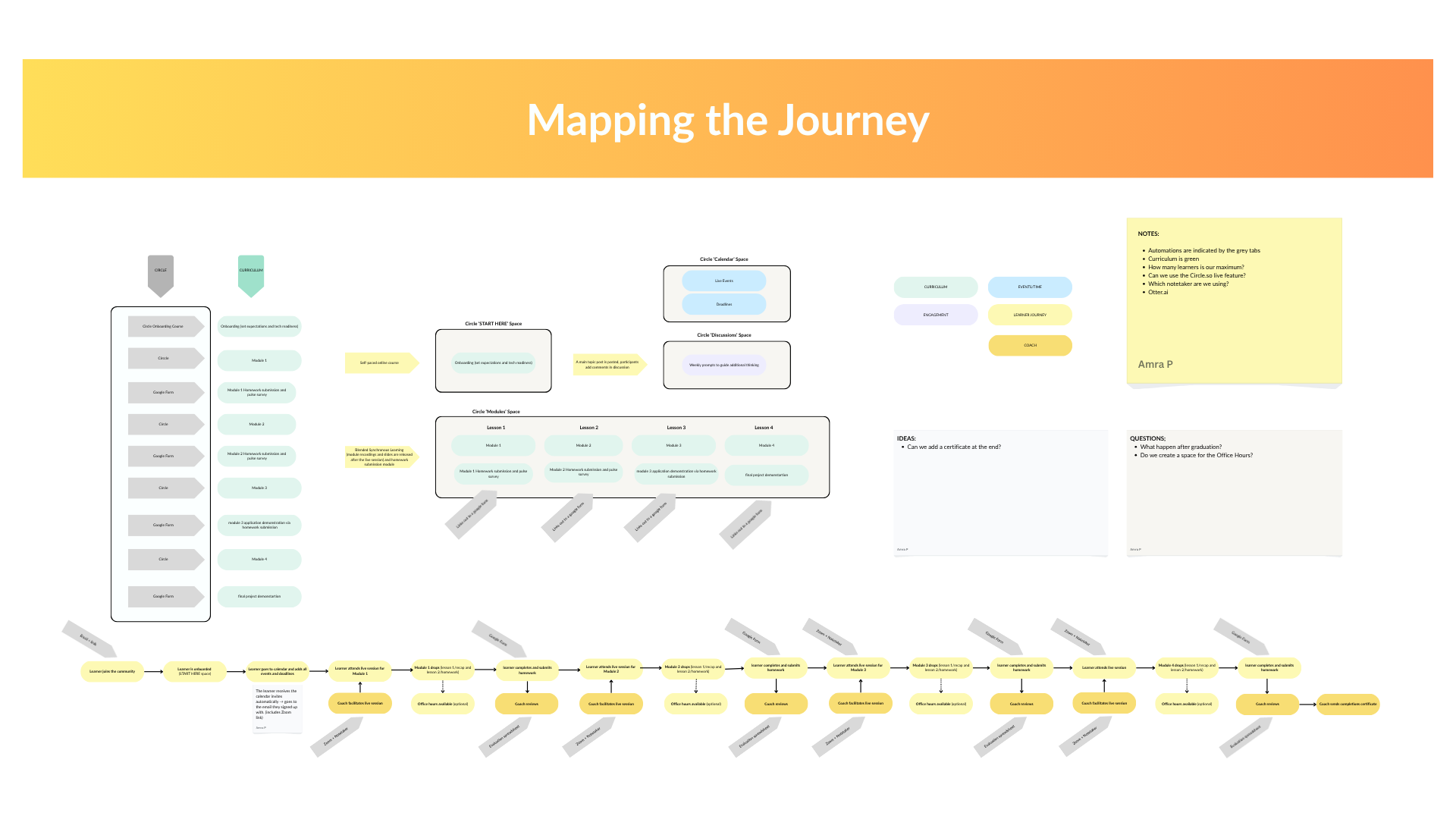
Before any of it was built, the full learner journey was mapped, including exactly which steps run automatically and which stay in human hands.
The Curriculum
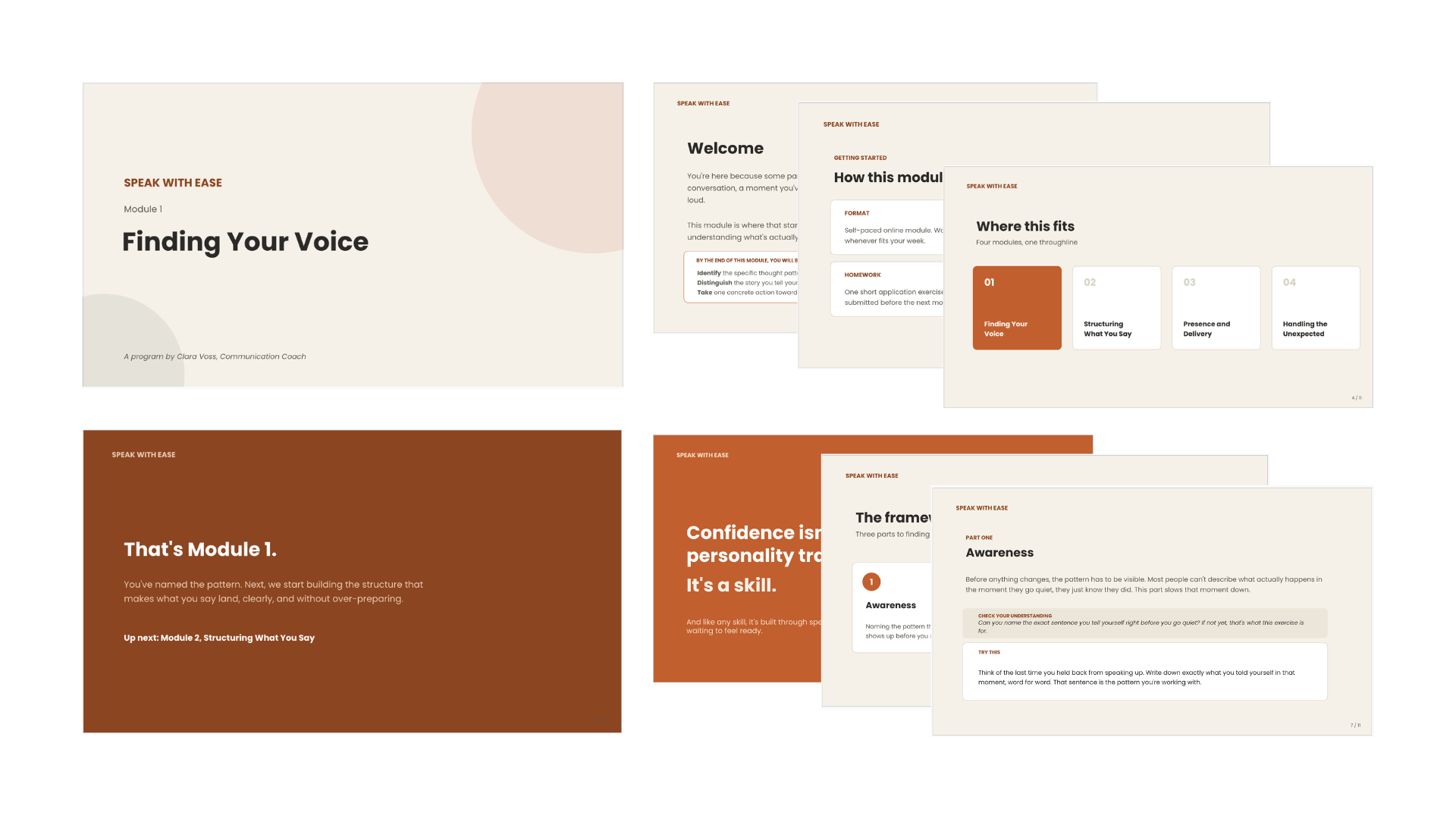
A full four-module program built with real instructional structure: stated learning objectives, a three-part framework, and a guided check for understanding before every practice exercise.
The Workbook
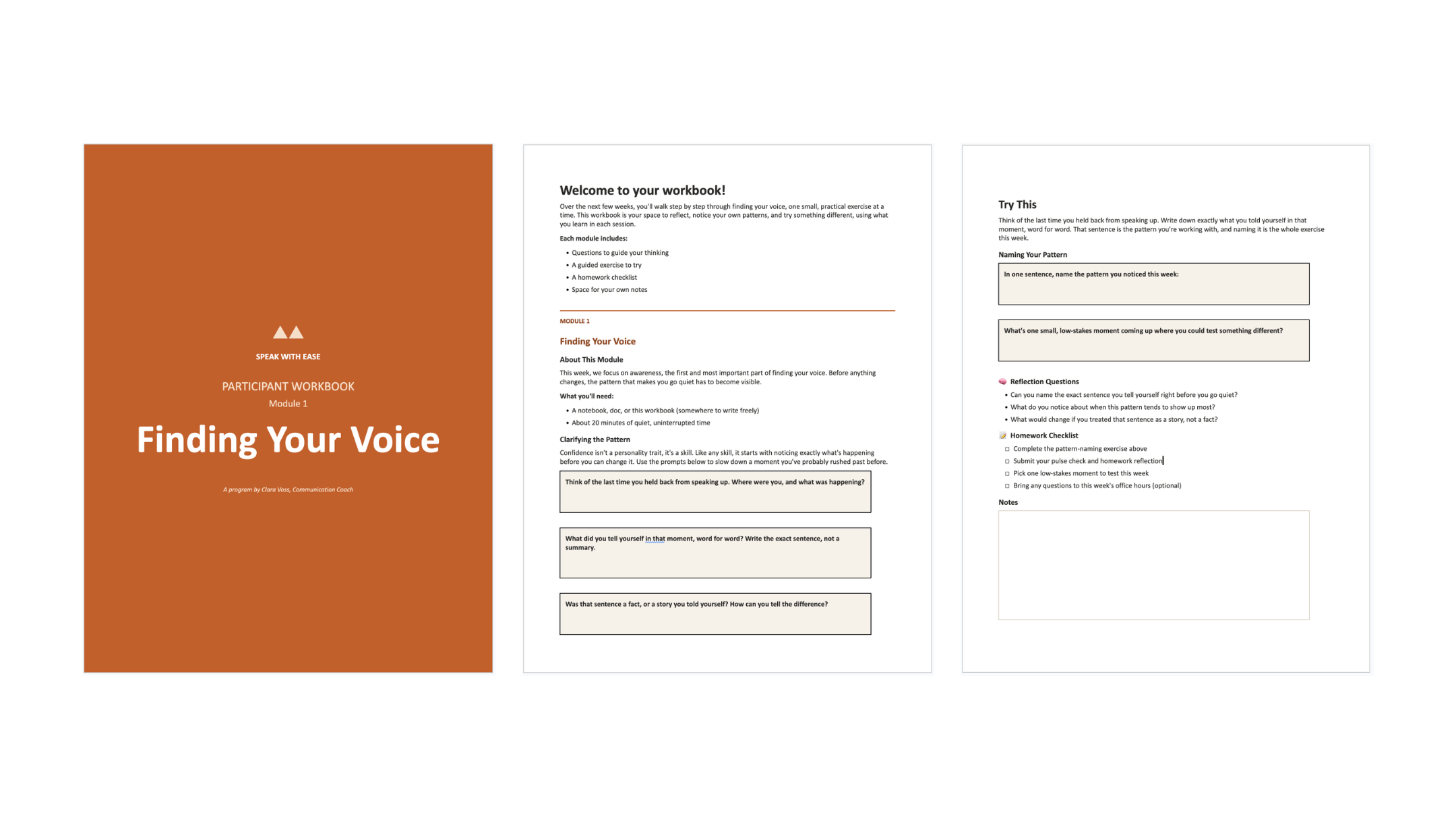
A participant workbook to go alongside each module, guided reflection prompts, a hands-on exercise, and a homework checklist, giving the curriculum a place to actually live outside the slides.
Submission and Assessment
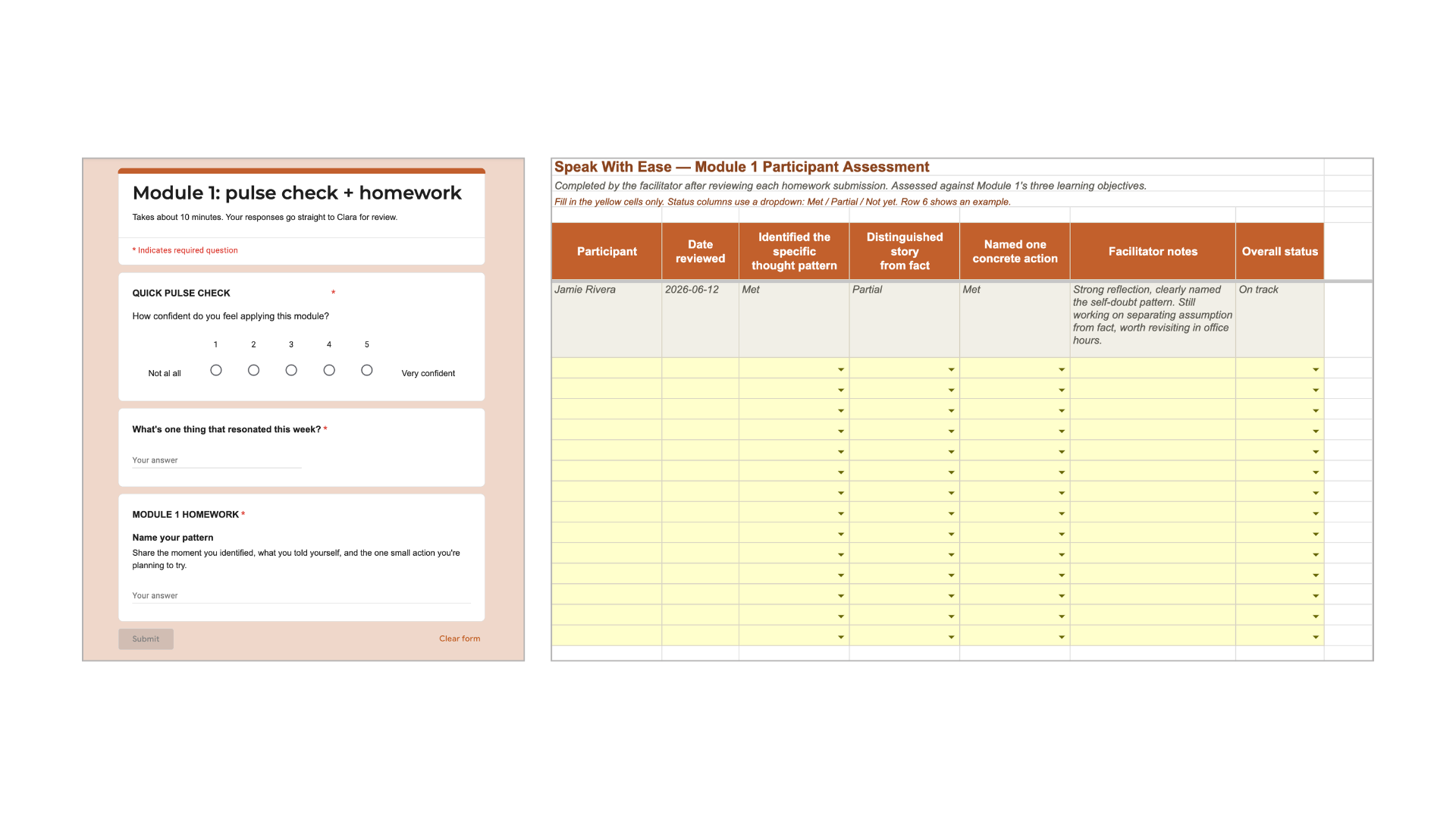
A combined pulse-check and homework form, solving Circle's missing submission feature with something that feels native to the platform, paired with a facilitator scoring sheet tied directly to each module's own learning objectives. One captures the learner's work, the other closes the loop.
The Platform
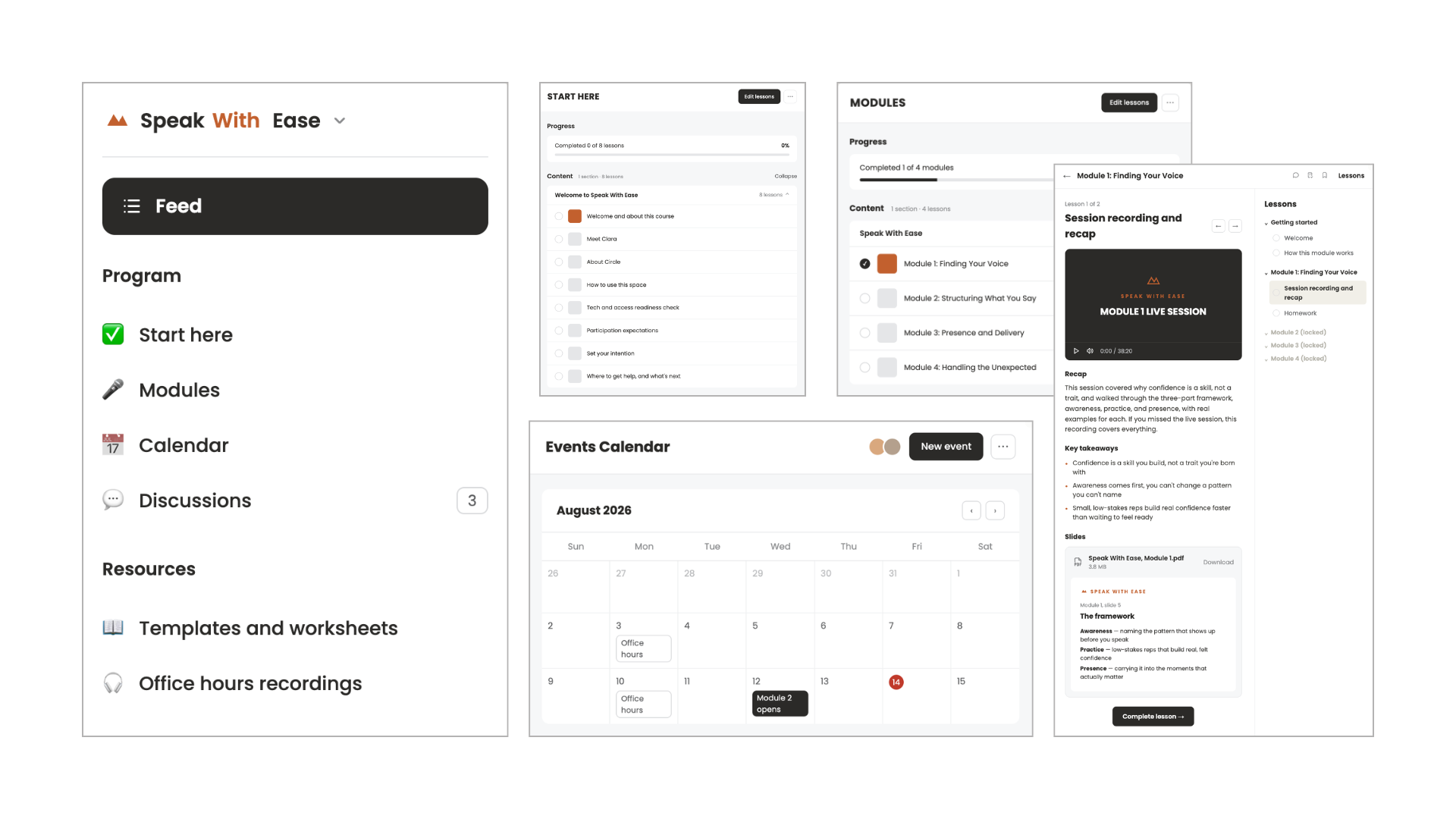
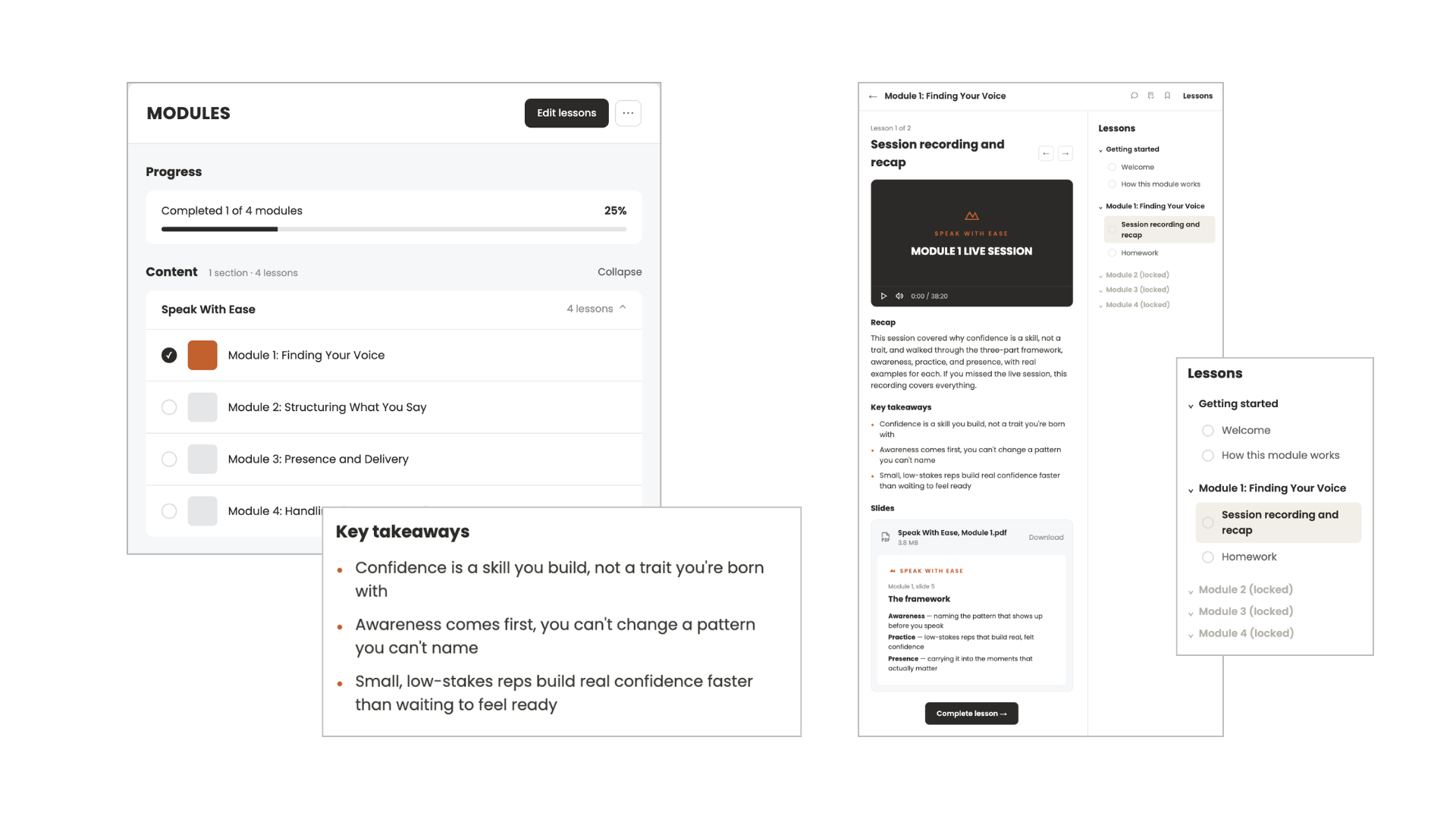
The full Circle community built to run it: navigation, onboarding, sequential modules that unlock as work is completed, a live calendar, and lesson pages connecting the recording, slides, and homework in one place. The Discussions space rounds it out, where members introduce themselves and build community, and where the facilitator checks in between sessions with prompts that keep the thinking going.